
ISSB /
IFRS S1 & S2
ClimaTwin Global Climate Disclosure Alignment
| Jurisdiction / Framework | Key Disclosure Requirements | Physical Risk Assessment | Financial Impact Modeling | Scenario Analysis | Governance & Strategy Reporting |
|---|---|---|---|---|---|
| ISSB / IFRS S1 & S2 | Disclosure of governance, strategy, risk management, metrics and targets, physical and transition risks, financial effects, and resilience | CORE Essential to |
CORE Essential to |
CORE Essential to |
CORE Essential to |
Framework Support Modules
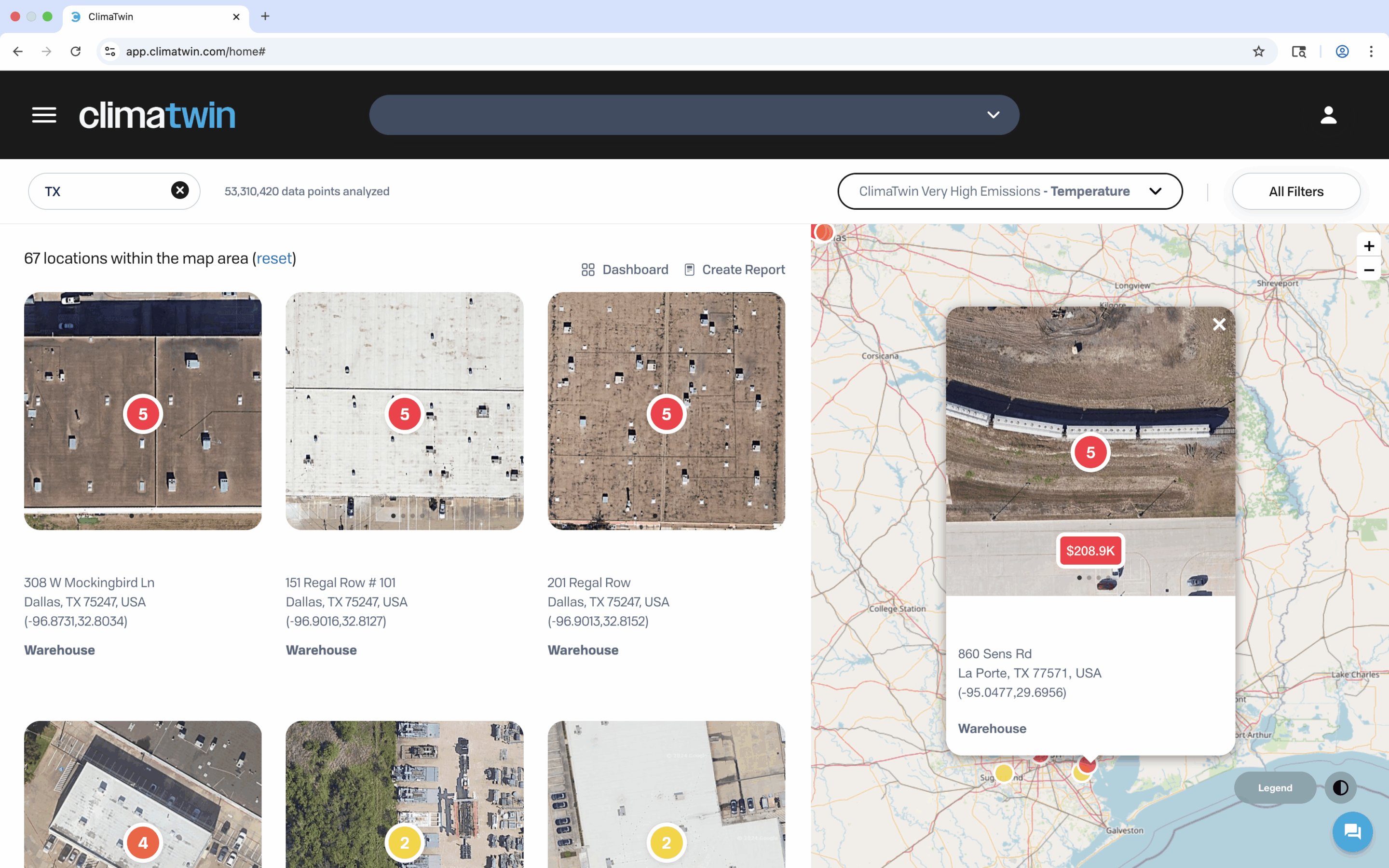
Physical Risk Assessment: CORE
Asset-Level Physical Risk Scoring
- Identify vulnerabilities to floods, heatwaves, wildfires, storms, and other climate hazards.
- Rank hazards, exposures, vulnerabilities, and adaptive capacities to focus on highest risk assets.
- Invest in preventive measures and proactive upgrades that best reduce climate risks and strengthen asset resilience.
Financial Impact Modeling: CORE
- Estimate financial impacts from asset damages, service disruptions, and operational delays.
- Integrate climate risk data into investment strategies and maintenance budgets for better resource allocation.
- Leverage risk assessments to shape policies, negotiate terms, and optimize premiums.
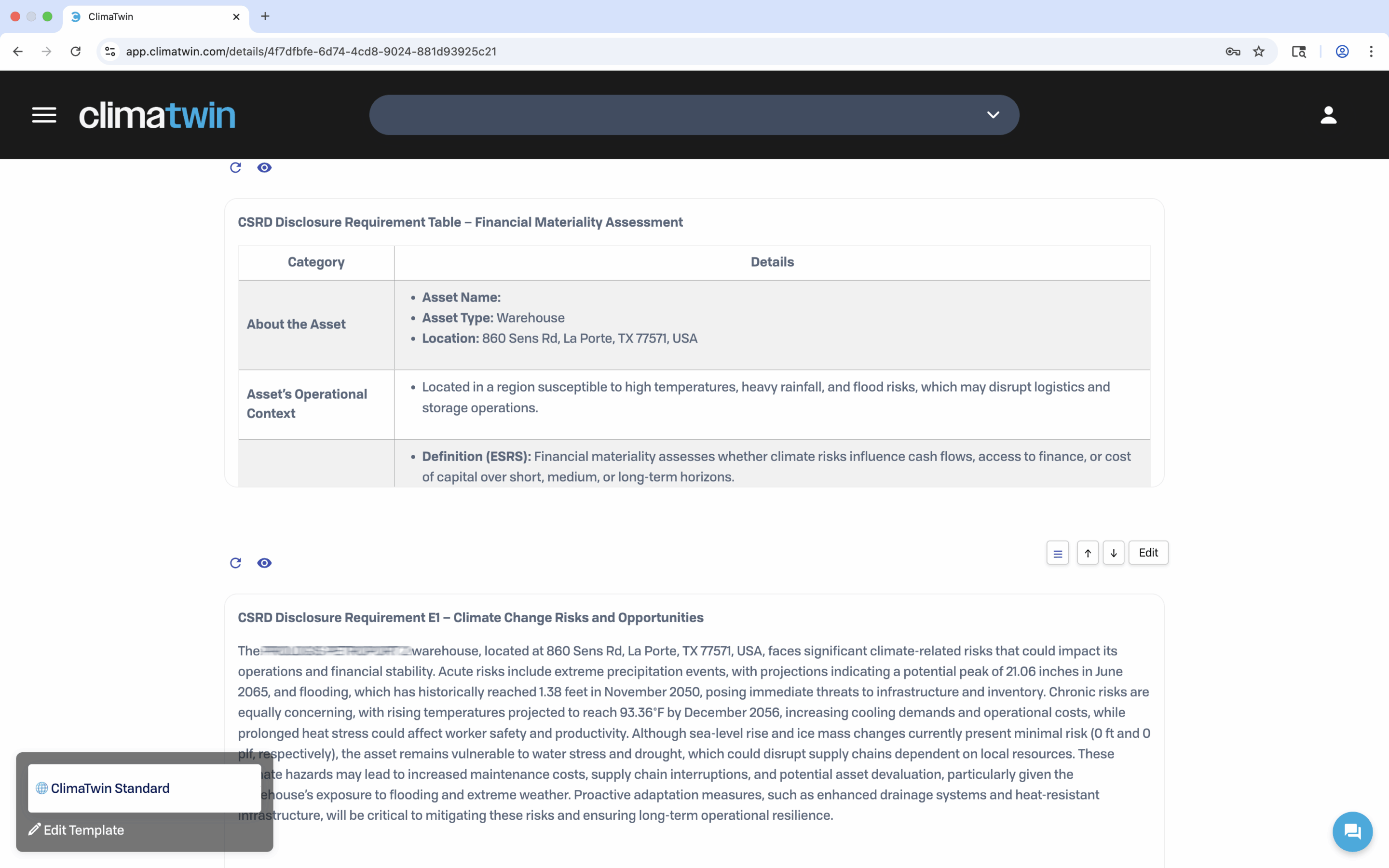
Scenario Analysis: CORE
Climate Futures Stress Testing
- Analyze climate model outputs and socioeconomic scenarios.
- Evaluate how assets and systems perform under moderate to extreme climate futures.
- Develop adaptable strategies that prepare for favorable and severe outcomes.
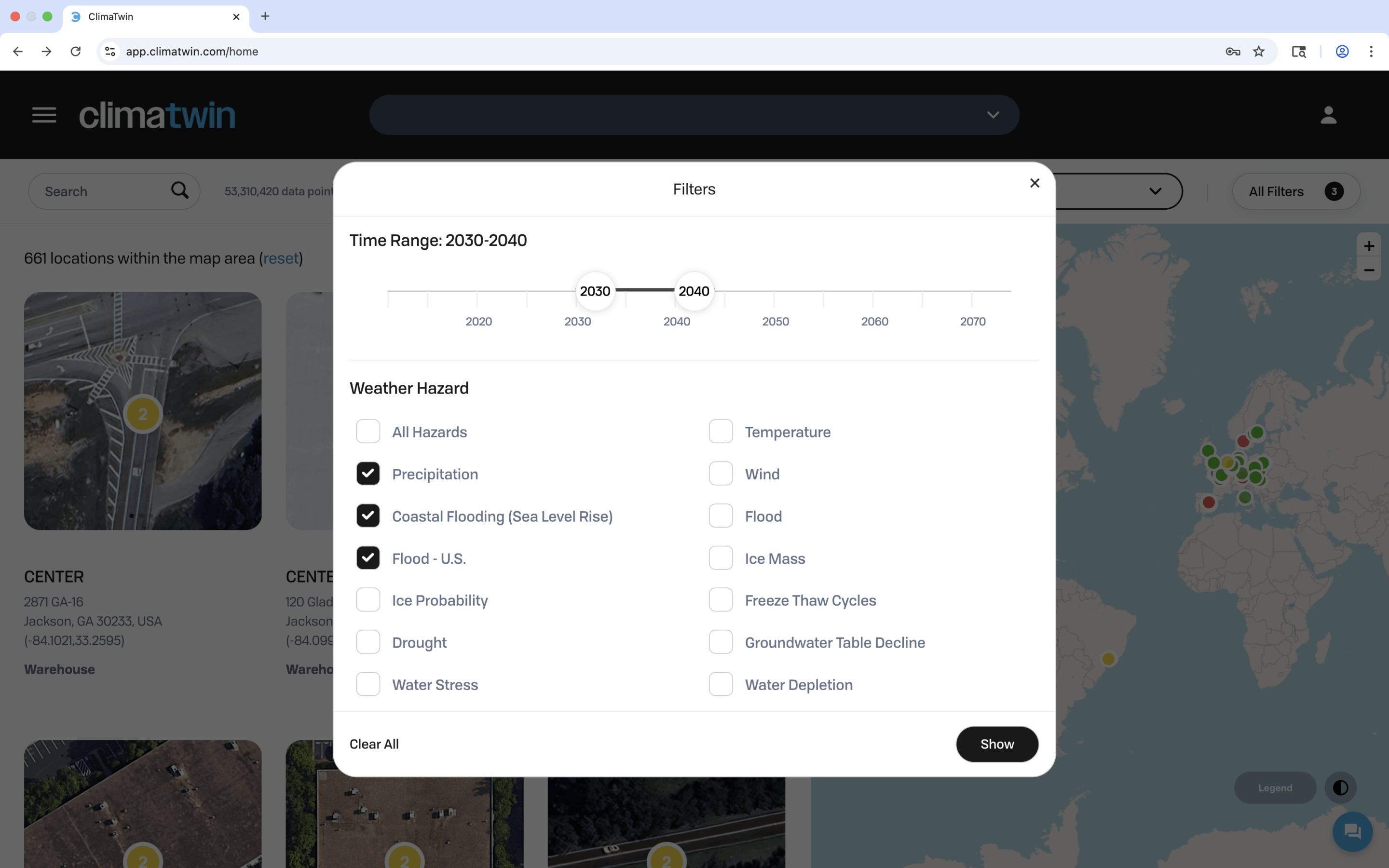
Governance Reporting: CORE
Regulatory-Aligned Reporting Templates
- Produce high-quality reports aligned with leading climate disclosure standards.
- Streamline data collection, analysis, and format.
- Provide clear climate risk information for investors, regulators, and stakeholders.
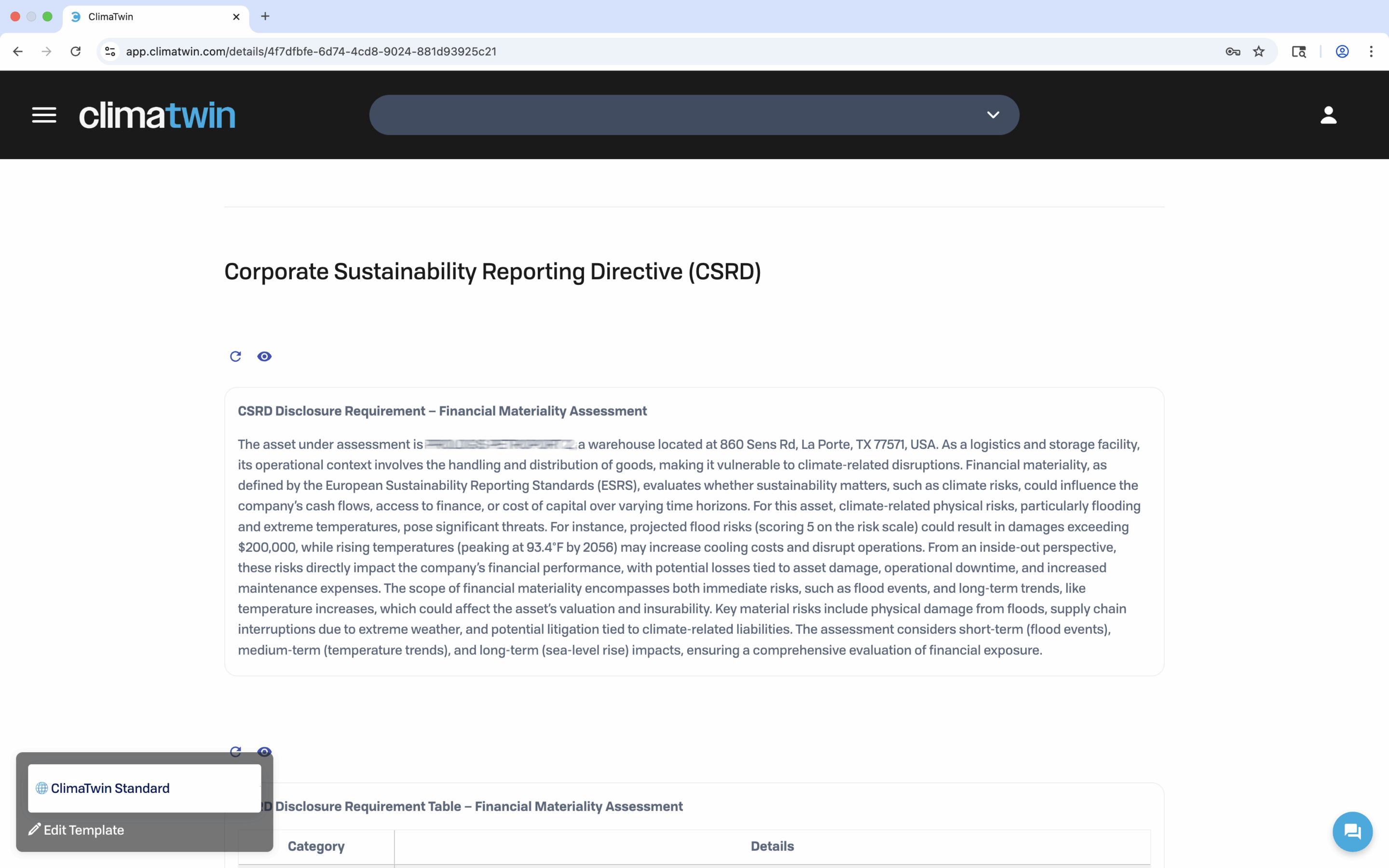
Strategy Reporting: CORE
Stakeholder-Ready Visualizations
- Transform climate risk insights, data, and analytics into clear visuals.
- Highlight major climate threats with actionable strategies.
- Develop evidence-based graphics that communicate key insights and motivate decisive action.
Frameworks FAQs
What is the purpose of IFRS S1 and IFRS S2 in climate disclosure?
They provide an investor-focused structure for sustainability and climate disclosure that connects risk, strategy, metrics, and financial effects.
How do IFRS S1 and IFRS S2 work together in a reporting program?
IFRS S1 sets the general disclosure architecture, while IFRS S2 applies that architecture specifically to climate-related risks and opportunities.
Which climate topics should be disclosed under IFRS S2?
Governance, strategy, risk management, metrics and targets, plus physical and transition risks, climate opportunities, and resilience.
How should governance and risk management be described for ISSB alignment?
Explain board oversight, management roles, decision processes, and how climate risks are identified, assessed, prioritized, and monitored.
What counts as current and anticipated financial effects under IFRS S2?
Effects on revenue, costs, asset values, capital allocation, financing, or cash flows arising from climate risks and opportunities.
When is scenario analysis expected in an ISSB-aligned workflow?
When it helps explain climate resilience, strategic choices, and exposure under different plausible futures.
How should organizations distinguish physical risks from transition risks?
Physical risks arise from climate hazards and chronic change, while transition risks arise from policy, market, legal, technology, or reputation shifts.
What metrics and targets are typically reported under ISSB?
Common disclosures include greenhouse gas emissions, climate-related targets, capital deployment, internal metrics, and progress against transition plans.
How can internal data be mapped to IFRS S1 and IFRS S2 requirements?
Align finance, operations, emissions, and risk datasets to the four disclosure pillars and document owners, methods, and controls.
How can digital twin outputs support ISSB-aligned climate reporting?
They can quantify asset exposure, operational vulnerability, and adaptation outcomes to strengthen risk, strategy, and resilience disclosures.