
California
SB 253 & SB 261
ClimaTwin Global Climate Disclosure Alignment
| Jurisdiction / Framework | Key Disclosure Requirements | Physical Risk Assessment | Financial Impact Modeling | Scenario Analysis | Governance & Strategy Reporting |
|---|---|---|---|---|---|
| California – SB 253 & SB 261 | Disclosure of annual GHG emissions, biennial climate related financial risk, and mitigation and adaptation measures | STRONG High-priority for alignment |
STRONG High-priority for alignment |
SUPPORT Supports |
STRONG High-priority for alignment |
Framework Support Modules
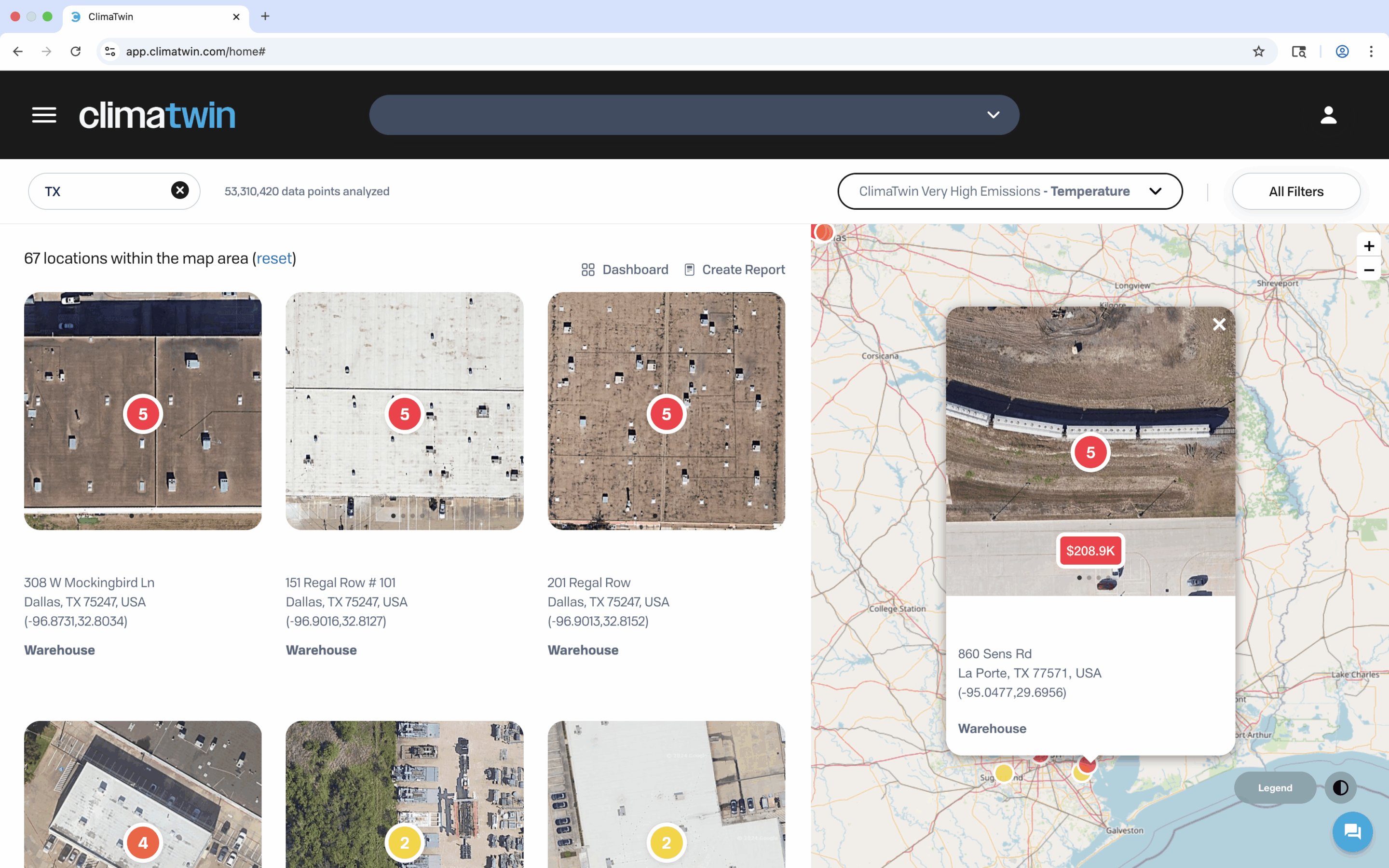
Physical Risk Assessment: STRONG
Asset-Level Physical Risk Scoring
- Identify vulnerabilities to floods, heatwaves, wildfires, storms, and other climate hazards.
- Rank hazards, exposures, vulnerabilities, and adaptive capacities to focus on highest risk assets.
- Invest in preventive measures and proactive upgrades that best reduce climate risks and strengthen asset resilience.
Financial Impact Modeling: STRONG
- Estimate financial impacts from asset damages, service disruptions, and operational delays.
- Integrate climate risk data into investment strategies and maintenance budgets for better resource allocation.
- Leverage risk assessments to shape policies, negotiate terms, and optimize premiums.
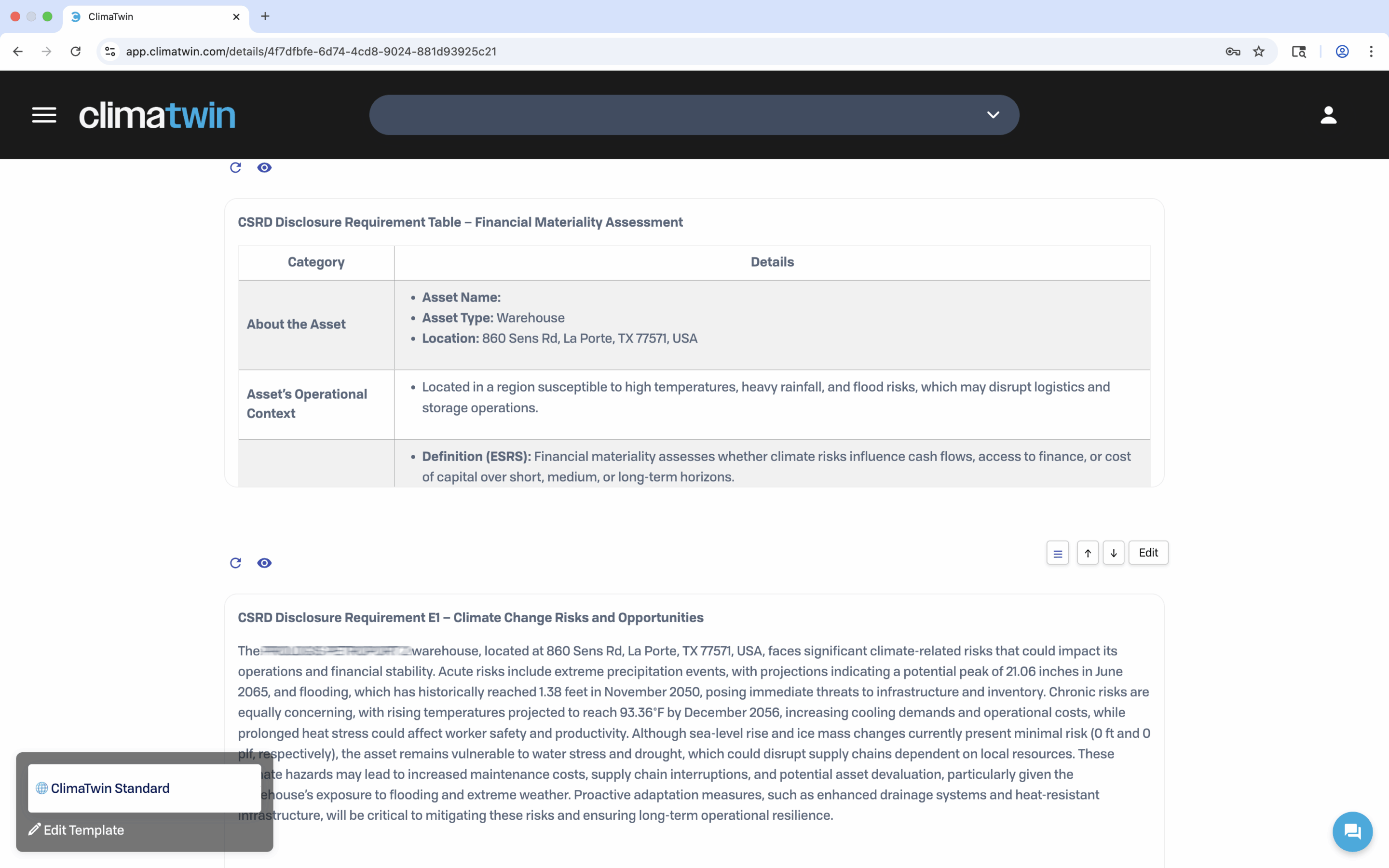
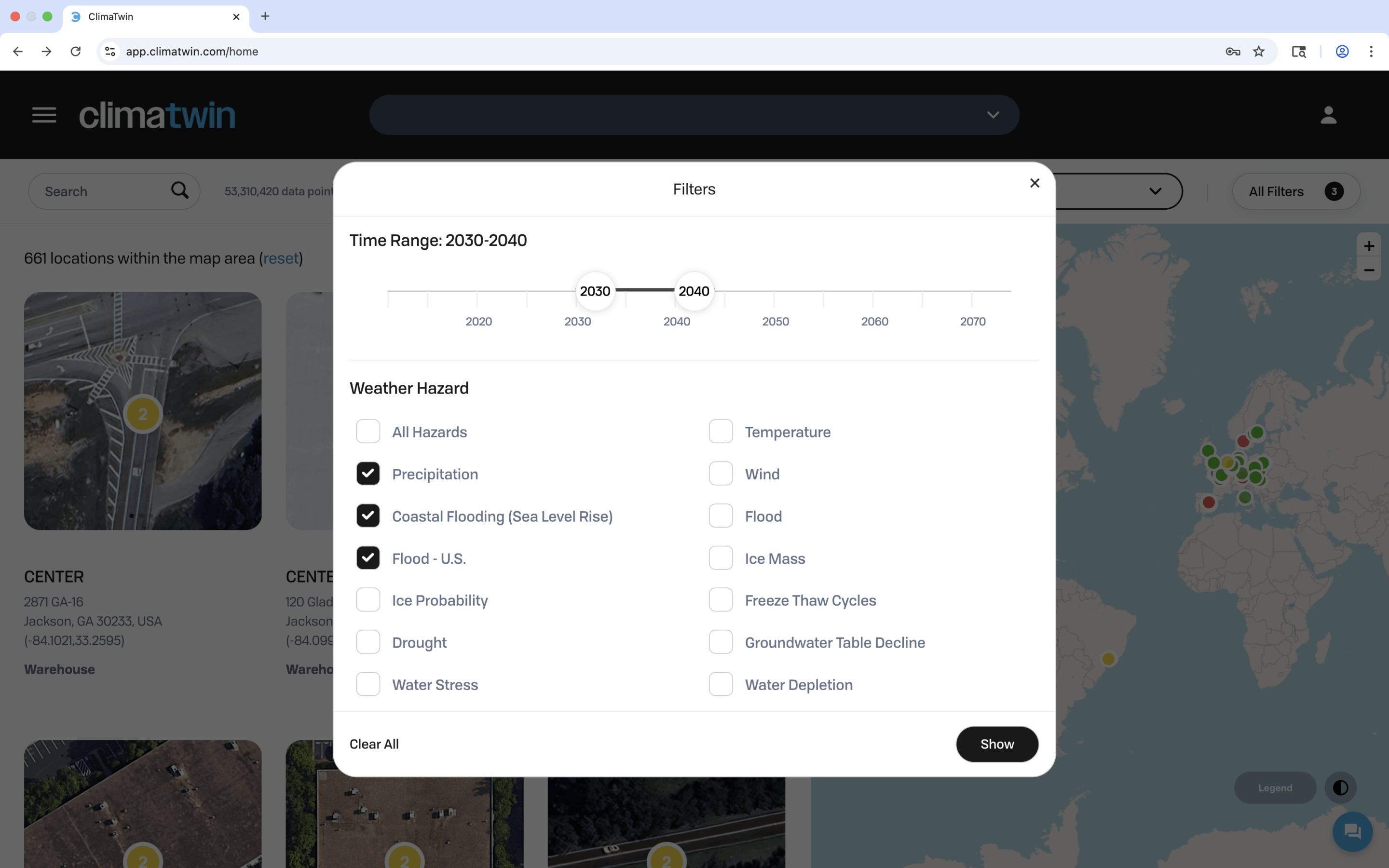
Scenario Analysis: SUPPORT
Climate Futures Stress Testing
- Analyze climate model outputs and socioeconomic scenarios.
- Evaluate how assets and systems perform under moderate to extreme climate futures.
- Develop adaptable strategies that prepare for favorable and severe outcomes.
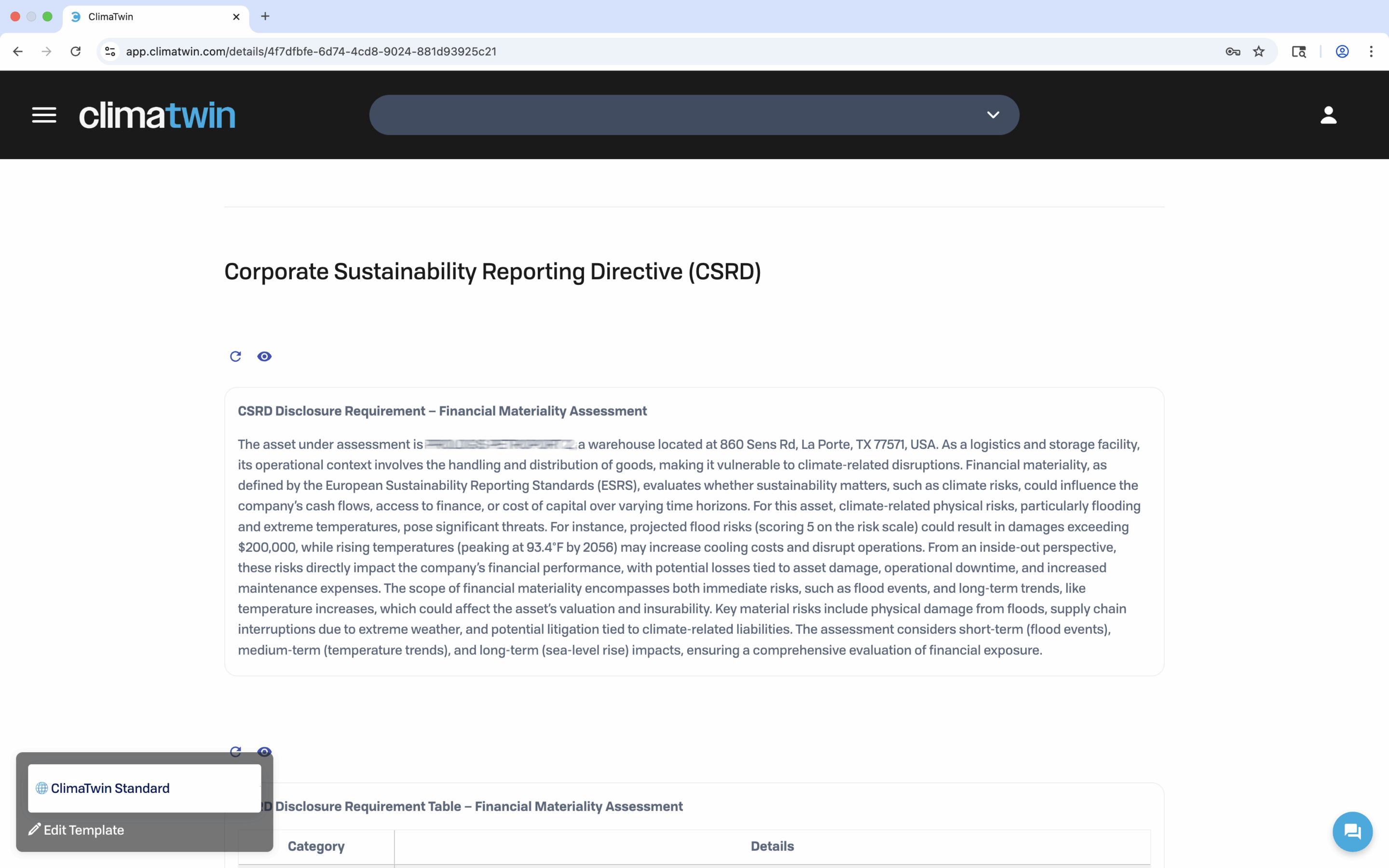
Governance Reporting: STRONG
Regulatory-Aligned Reporting Templates
- Produce high-quality reports aligned with leading climate disclosure standards.
- Streamline data collection, analysis, and format.
- Provide clear climate risk information for investors, regulators, and stakeholders.
Strategy Reporting: STRONG
Stakeholder-Ready Visualizations
- Transform climate risk insights, data, and analytics into clear visuals.
- Highlight major climate threats with actionable strategies.
- Develop evidence-based graphics that communicate key insights and motivate decisive action.
Frameworks FAQs
Which companies are most likely to fall within the scope of SB 253 and SB 261?
Large U.S.-based entities doing business in California that meet the laws’ revenue and reporting thresholds are the most likely candidates.
What is the difference between emissions disclosure and climate-related financial risk disclosure in California?
SB 253 focuses on greenhouse gas emissions reporting, while SB 261 focuses on climate-related financial risks and the measures used to reduce and adapt to them.
When should teams prepare for Scope 1, Scope 2, and Scope 3 reporting workflows?
Teams should build data, controls, and ownership early because Scope 1 and 2, then Scope 3, require different systems, evidence, and supplier inputs.
What qualifies as climate-related financial risk under SB 261?
Material physical or transition exposure that could affect operations, assets, supply chains, cash flows, financing, or enterprise value.
How should resilience or adaptation measures be described in a California-facing disclosure?
Describe the specific actions, timelines, and decision logic used to reduce exposure, improve resilience, and monitor results.
What data, systems, and controls are needed to support California reporting?
A defensible inventory of emissions sources, asset exposures, governance approvals, and auditable controls across finance, operations, and risk functions.
How can asset-level physical risk assessments strengthen SB 261 reporting?
They show where risk is concentrated, which assets matter most, and which resilience measures are most likely to reduce loss.
How should scenario analysis support a California climate risk narrative?
Use plausible climate futures to explain how risks, financial effects, and adaptation priorities may change over time.
What role should boards and executives play in California oversight and sign-off?
Boards should oversee climate-risk governance, while executives assign ownership, review assumptions, and approve disclosures and mitigation plans.
How can companies align California reporting with broader global disclosure frameworks?
Use a common control framework so California disclosures can reuse governance, risk, metrics, and scenario-analysis content prepared for global reporting.