
EU Sustainable Finance
SFDR + EU Taxonomy
ClimaTwin Global Climate Disclosure Alignment
| Jurisdiction / Framework | Key Disclosure Requirements | Physical Risk Assessment | Financial Impact Modeling | Scenario Analysis | Governance & Strategy Reporting |
|---|---|---|---|---|---|
| EU Sustainable Finance (SFDR + EU Taxonomy) | Disclosure of firm and product level sustainability risk, principal adverse impacts, and taxonomy alignment KPIs including turnover, CapEx, | SUPPORT Supports |
MODERATE Relevant in |
SUPPORT Supports |
MODERATE Relevant in |
Framework Support Modules
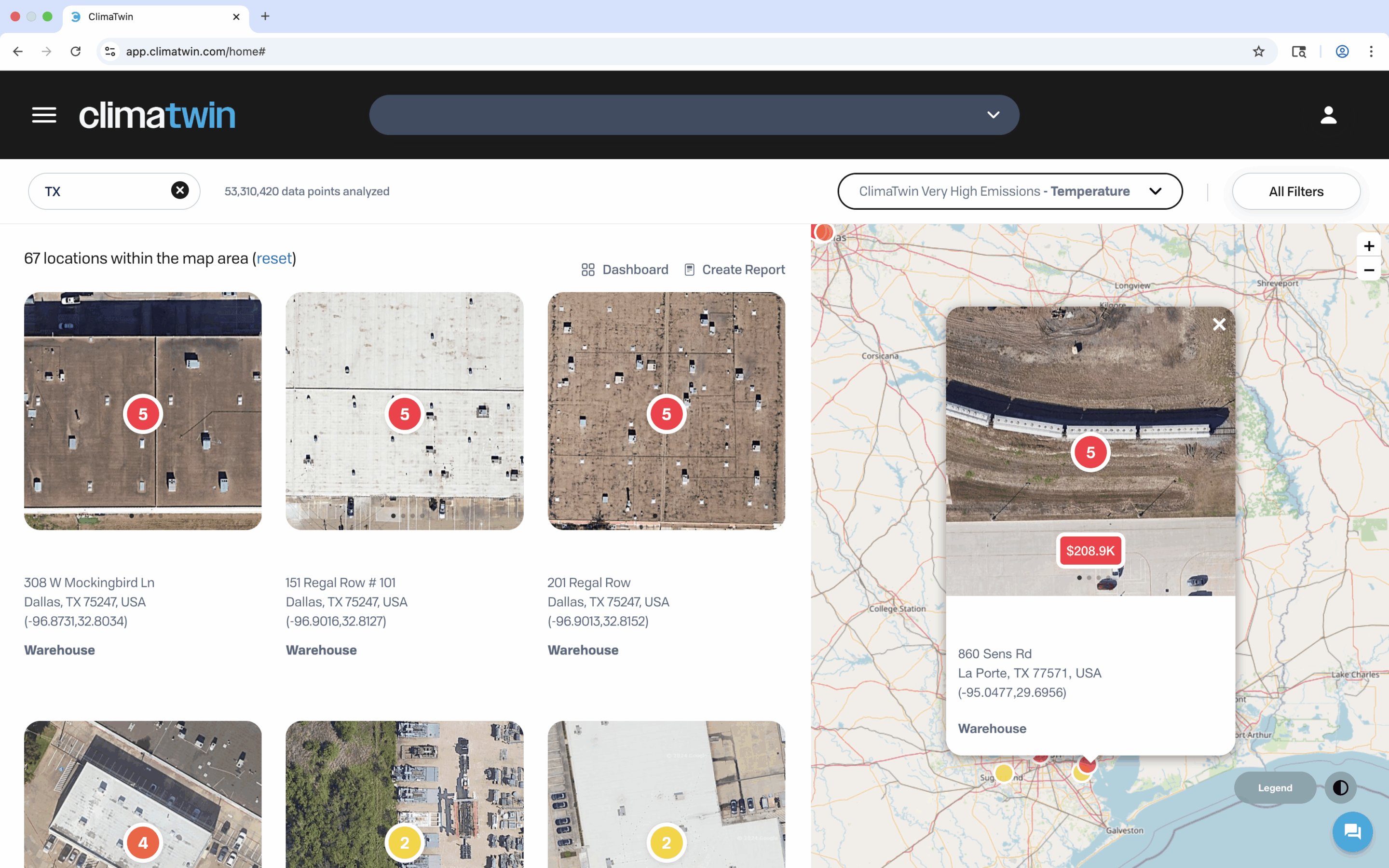
Physical Risk Assessment: SUPPORT
Asset-Level Physical Risk Scoring
- Identify vulnerabilities to floods, heatwaves, wildfires, storms, and other climate hazards.
- Rank hazards, exposures, vulnerabilities, and adaptive capacities to focus on highest risk assets.
- Invest in preventive measures and proactive upgrades that best reduce climate risks and strengthen asset resilience.
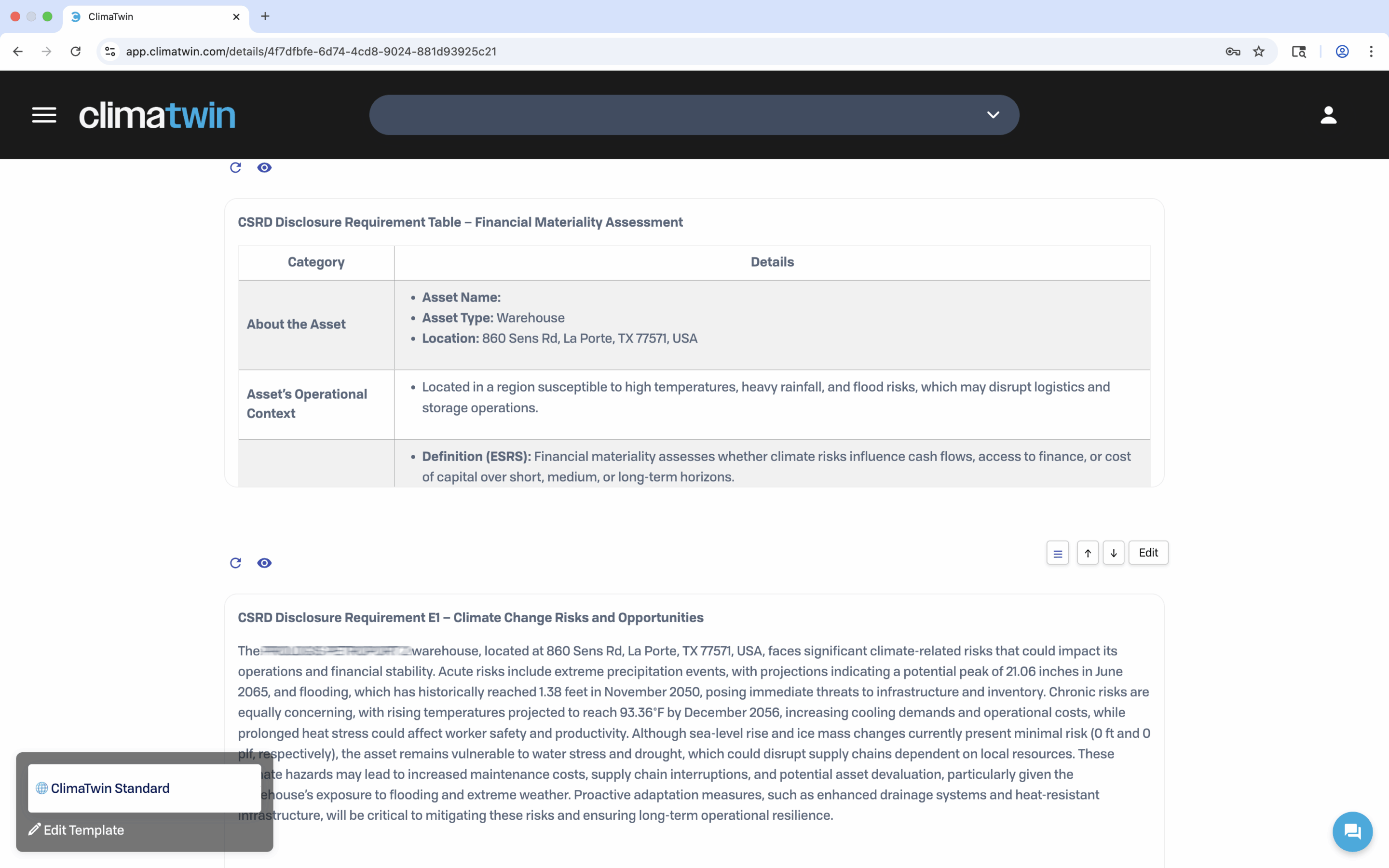
Financial Impact Modeling: MODERATE
- Estimate financial impacts from asset damages, service disruptions, and operational delays.
- Integrate climate risk data into investment strategies and maintenance budgets for better resource allocation.
- Leverage risk assessments to shape policies, negotiate terms, and optimize premiums.
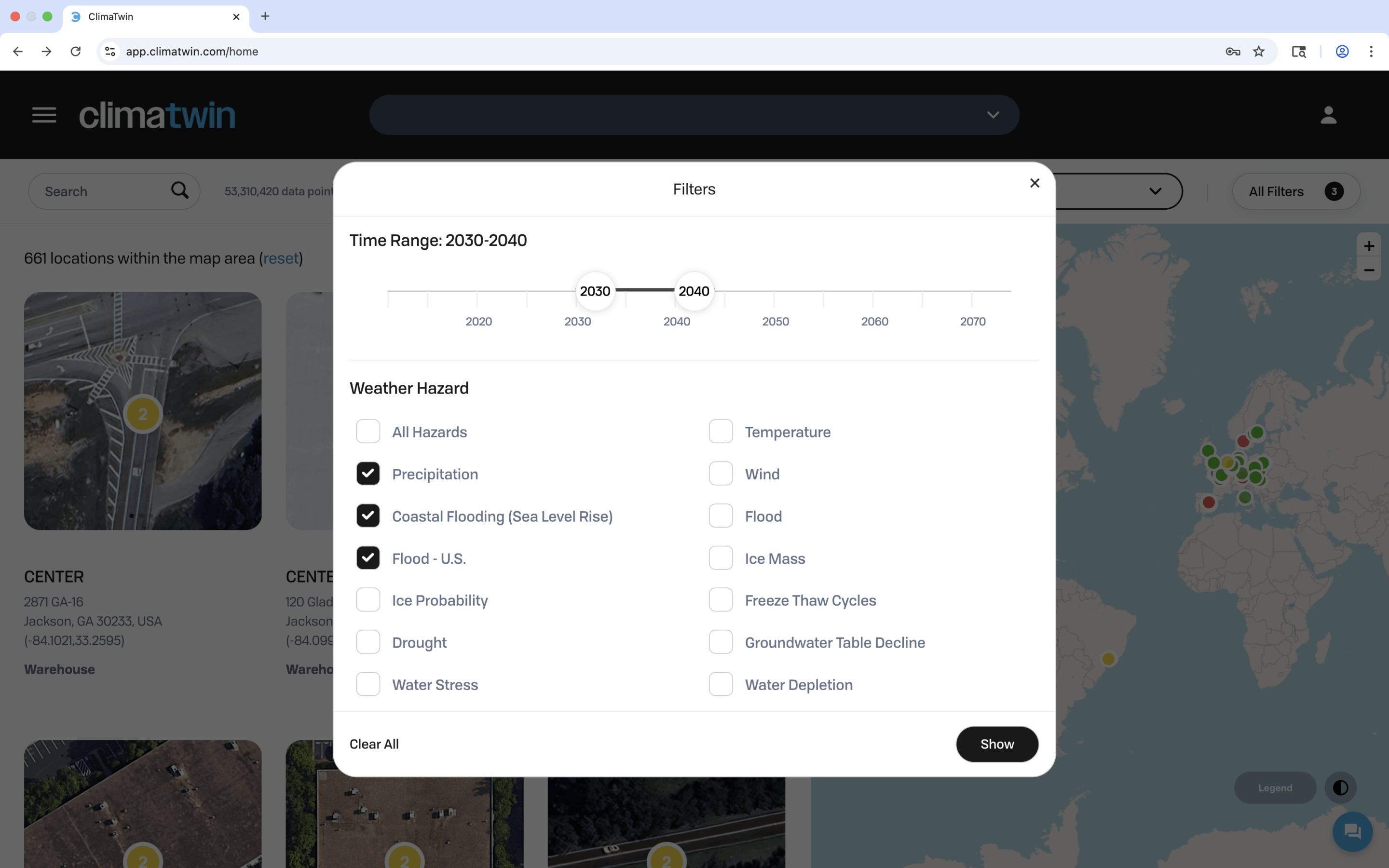
Scenario Analysis: SUPPORT
Climate Futures Stress Testing
- Analyze climate model outputs and socioeconomic scenarios.
- Evaluate how assets and systems perform under moderate to extreme climate futures.
- Develop adaptable strategies that prepare for favorable and severe outcomes.
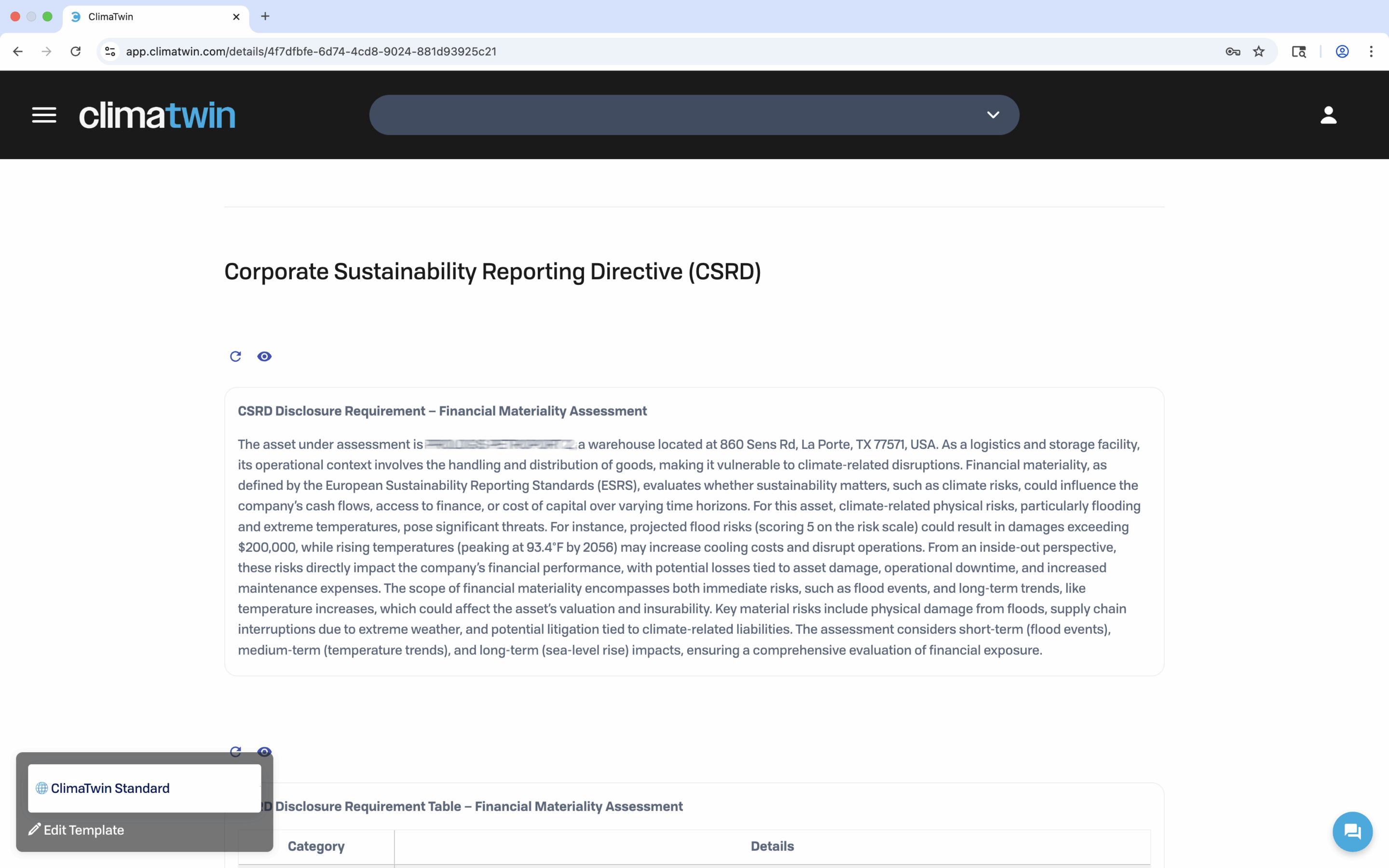
Governance Reporting: MODERATE
Regulatory-Aligned Reporting Templates
- Produce high-quality reports aligned with leading climate disclosure standards.
- Streamline data collection, analysis, and format.
- Provide clear climate risk information for investors, regulators, and stakeholders.
Strategy Reporting: MODERATE
Stakeholder-Ready Visualizations
- Transform climate risk insights, data, and analytics into clear visuals.
- Highlight major climate threats with actionable strategies.
- Develop evidence-based graphics that communicate key insights and motivate decisive action.
Frameworks FAQs
What is the difference between SFDR and the EU Taxonomy?
SFDR is a disclosure regime for financial market participants and products, while the EU Taxonomy defines which activities count as environmentally sustainable.
Which firms or products most often need SFDR disclosures?
Asset managers, investment firms, insurers, advisers, and financial products making sustainability-related claims are the most likely to be affected.
What are principal adverse impacts in a practical reporting context?
They are standardized indicators used to disclose significant negative sustainability effects associated with investment decisions or advice.
How is EU Taxonomy alignment typically measured?
By assessing whether eligible activities meet technical criteria and then reporting aligned turnover, capital expenditure, or operating expenditure metrics.
What role do turnover, CapEx, and OpEx play in Taxonomy disclosure?
They quantify how much of an undertaking’s activity or investment aligns with the Taxonomy framework.
How can physical climate risk inform sustainable finance decisions?
It helps test whether assets, projects, or portfolios remain resilient under climate stress and supports risk integration.
When is scenario analysis helpful in SFDR or Taxonomy workflows?
It is useful when evaluating portfolio resilience, product claims, transition exposure, or forward-looking sustainability risk.
How should governance support product-level sustainability claims?
Governance should define controls, approvals, methodologies, and accountability for disclosures, classifications, and evidence.
What evidence is needed to support sustainable finance alignment disclosures?
Reliable data on holdings, activities, adverse impacts, eligibility, alignment tests, and underlying methodologies.
How can firms connect SFDR and Taxonomy outputs with broader climate reporting?
Shared climate-risk data, emissions metrics, and governance controls can support both entity-level and product-level reporting.