
EU
CSRD / ESRS
ClimaTwin Global Climate Disclosure Alignment
| Jurisdiction / Framework | Key Disclosure Requirements | Physical Risk Assessment | Financial Impact Modeling | Scenario Analysis | Governance & Strategy Reporting |
|---|---|---|---|---|---|
| EU CSRD / ESRS | Disclosure of double materiality, transition planning, mitigation and adaptation policies, targets, emissions, and financial effects | CORE Essential to |
CORE Essential to |
STRONG High-priority |
CORE Essential to |
Framework Support Modules
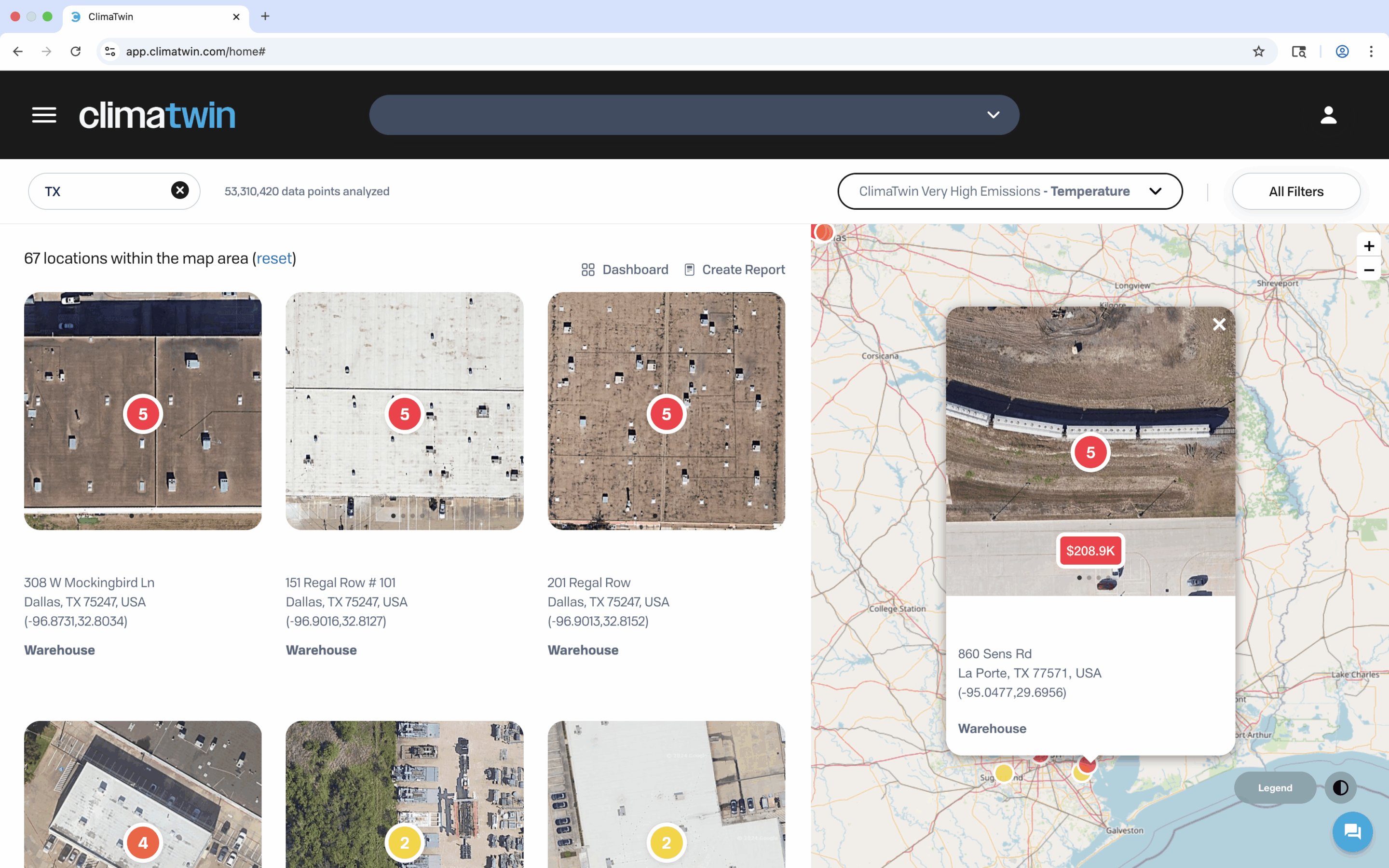
Physical Risk Assessment: CORE
Asset-Level Physical Risk Scoring
- Identify vulnerabilities to floods, heatwaves, wildfires, storms, and other climate hazards.
- Rank hazards, exposures, vulnerabilities, and adaptive capacities to focus on highest risk assets.
- Invest in preventive measures and proactive upgrades that best reduce climate risks and strengthen asset resilience.
Financial Impact Modeling: CORE
- Estimate financial impacts from asset damages, service disruptions, and operational delays.
- Integrate climate risk data into investment strategies and maintenance budgets for better resource allocation.
- Leverage risk assessments to shape policies, negotiate terms, and optimize premiums.
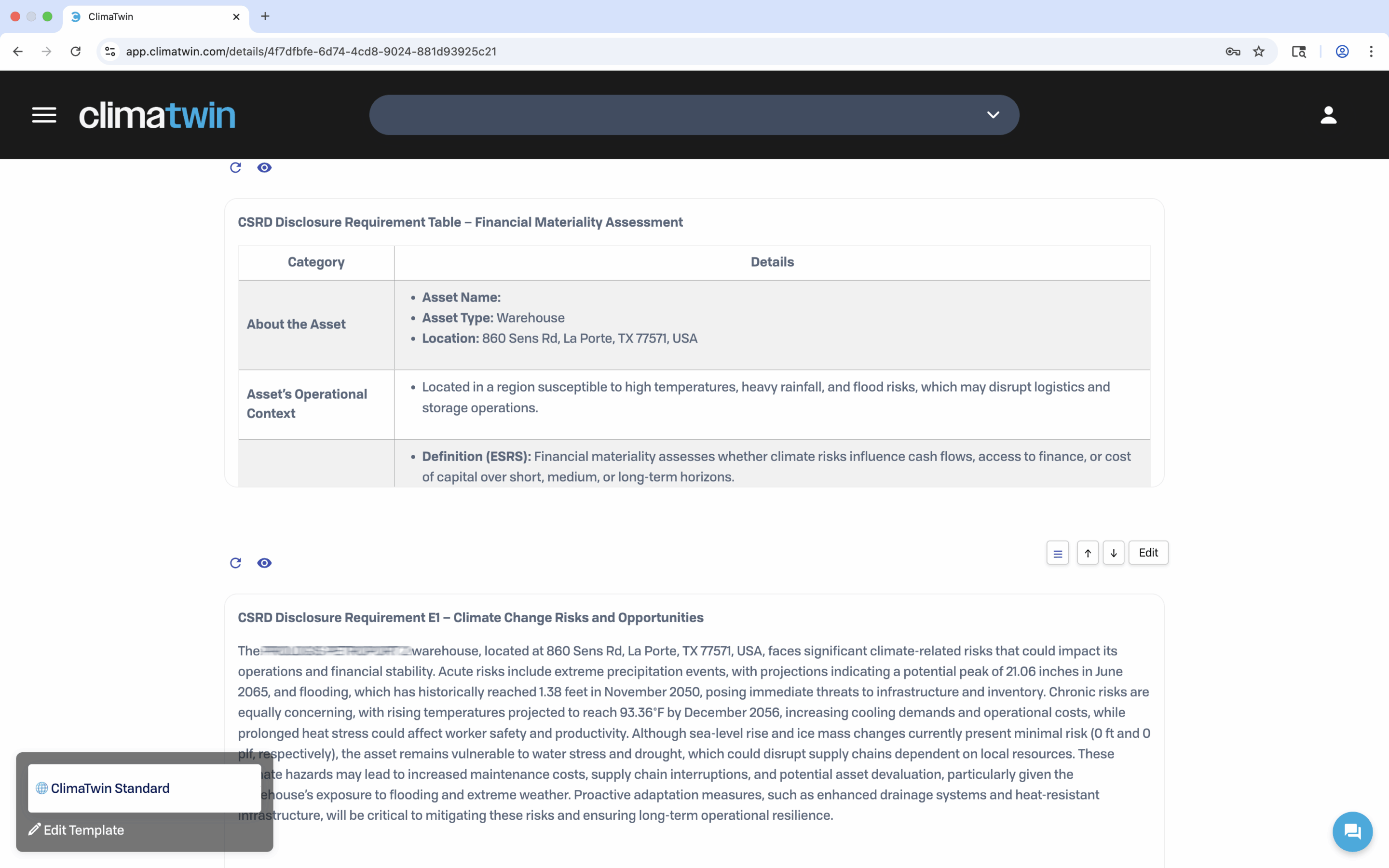
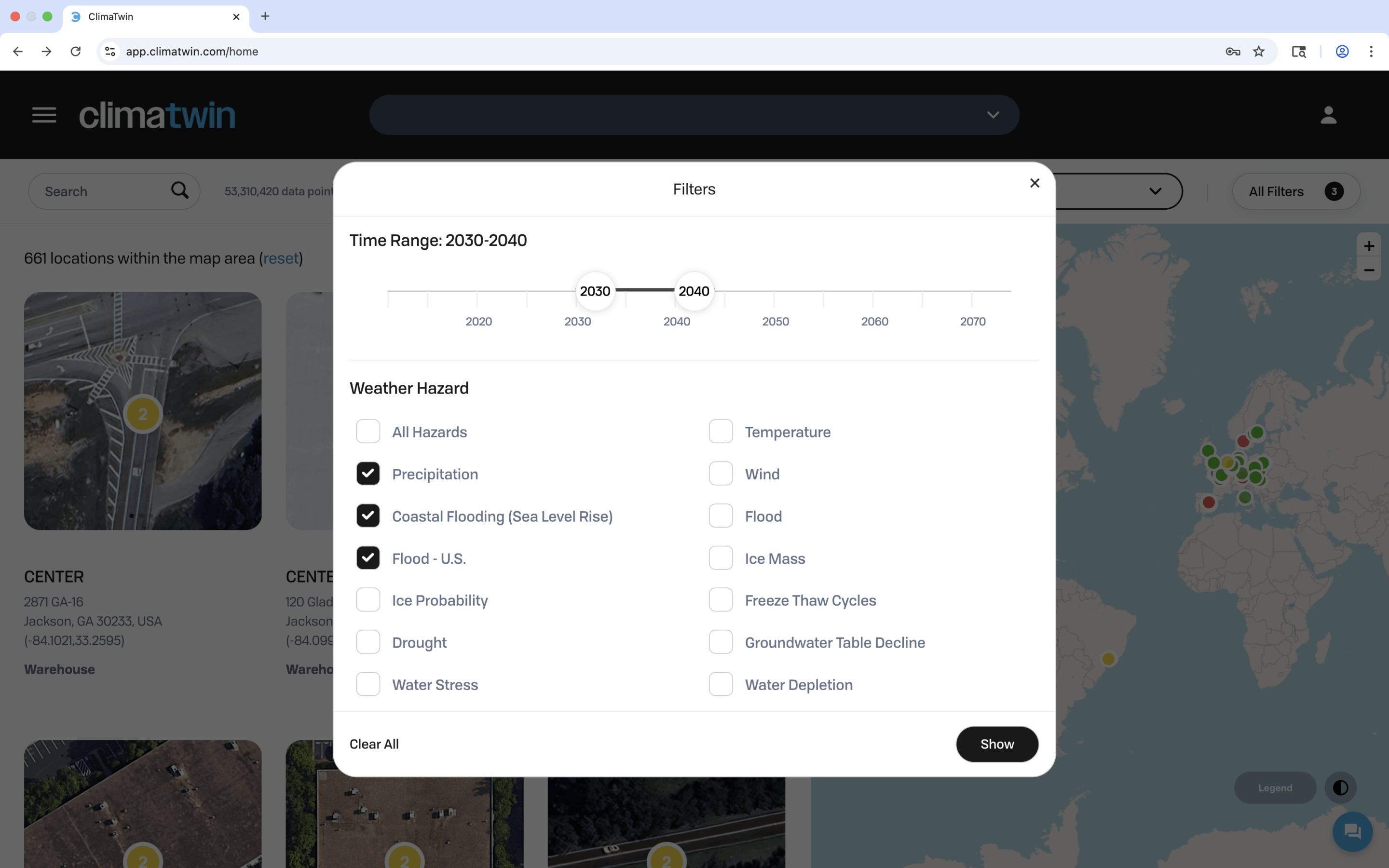
Scenario Analysis: STRONG
Climate Futures Stress Testing
- Analyze climate model outputs and socioeconomic scenarios.
- Evaluate how assets and systems perform under moderate to extreme climate futures.
- Develop adaptable strategies that prepare for favorable and severe outcomes.
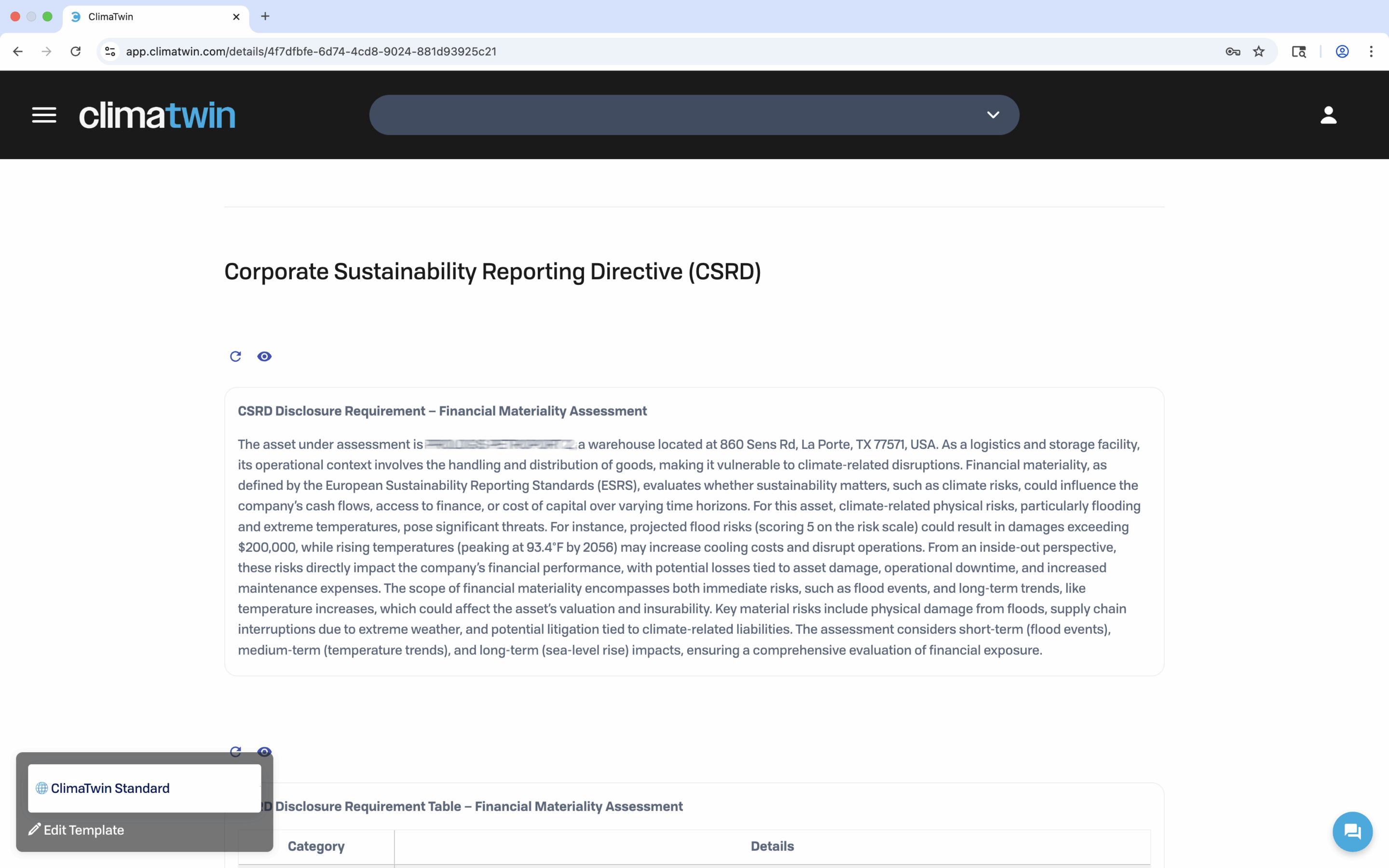
Governance Reporting: CORE
Regulatory-Aligned Reporting Templates
- Produce high-quality reports aligned with leading climate disclosure standards.
- Streamline data collection, analysis, and format.
- Provide clear climate risk information for investors, regulators, and stakeholders.
Strategy Reporting: CORE
Stakeholder-Ready Visualizations
- Transform climate risk insights, data, and analytics into clear visuals.
- Highlight major climate threats with actionable strategies.
- Develop evidence-based graphics that communicate key insights and motivate decisive action.
Frameworks FAQs
Which companies are most likely to be in scope for CSRD reporting?
Large EU companies, listed entities, and certain non-EU groups with substantial EU activity are the most likely to be in scope.
What does double materiality mean in practice for climate reporting?
It means assessing both how climate affects the company and how the company affects climate and people across its value chain.
Which climate disclosures are typically covered by ESRS E1?
Transition plans, mitigation and adaptation actions, emissions, targets, energy, and material climate-related impacts, risks, and opportunities.
How should transition plans be described under CSRD and ESRS?
Explain objectives, milestones, actions, financing, and governance for moving the business toward a lower-emissions model.
What climate adaptation information is usually expected in ESRS reporting?
Identify material physical risks, resilience actions, and how adaptation measures protect assets, operations, and stakeholders.
How are anticipated financial effects incorporated into ESRS-aligned disclosure?
Connect material climate risks and opportunities to expected effects on performance, position, cash flows, or capital needs.
When is scenario analysis most useful for CSRD compliance workflows?
When it supports resilience testing, transition planning, and the explanation of material climate assumptions.
How do asset-level climate risks feed into ESRS reporting and evidence?
They provide location-specific evidence for materiality judgments, adaptation priorities, and risk disclosures.
How should governance responsibilities be structured for CSRD compliance?
Assign clear board oversight, executive accountability, and cross-functional ownership for ESRS data, controls, and review.
How can companies align CSRD outputs with other global climate frameworks?
Build a common data model so ESRS disclosures can cross-reference ISSB, California, and internal climate-risk reporting.