
Australia & New Zealand
AASB S2 & NZ CS 1/2/3
ClimaTwin Global Climate Disclosure Alignment
| Jurisdiction / Framework | Key Disclosure Requirements | Physical Risk Assessment | Financial Impact Modeling | Scenario Analysis | Governance & Strategy Reporting |
|---|---|---|---|---|---|
| Australia & New Zealand Climate Standards (AASB S2; NZ CS 1/2/3) | Disclosure of climate related requirements under AASB S2 in Australia and governance,strategy, risk management, metrics and targets in New Zealand | CORE Essential to |
CORE Essential to |
CORE Essential to |
CORE Essential to |
Framework Support Modules
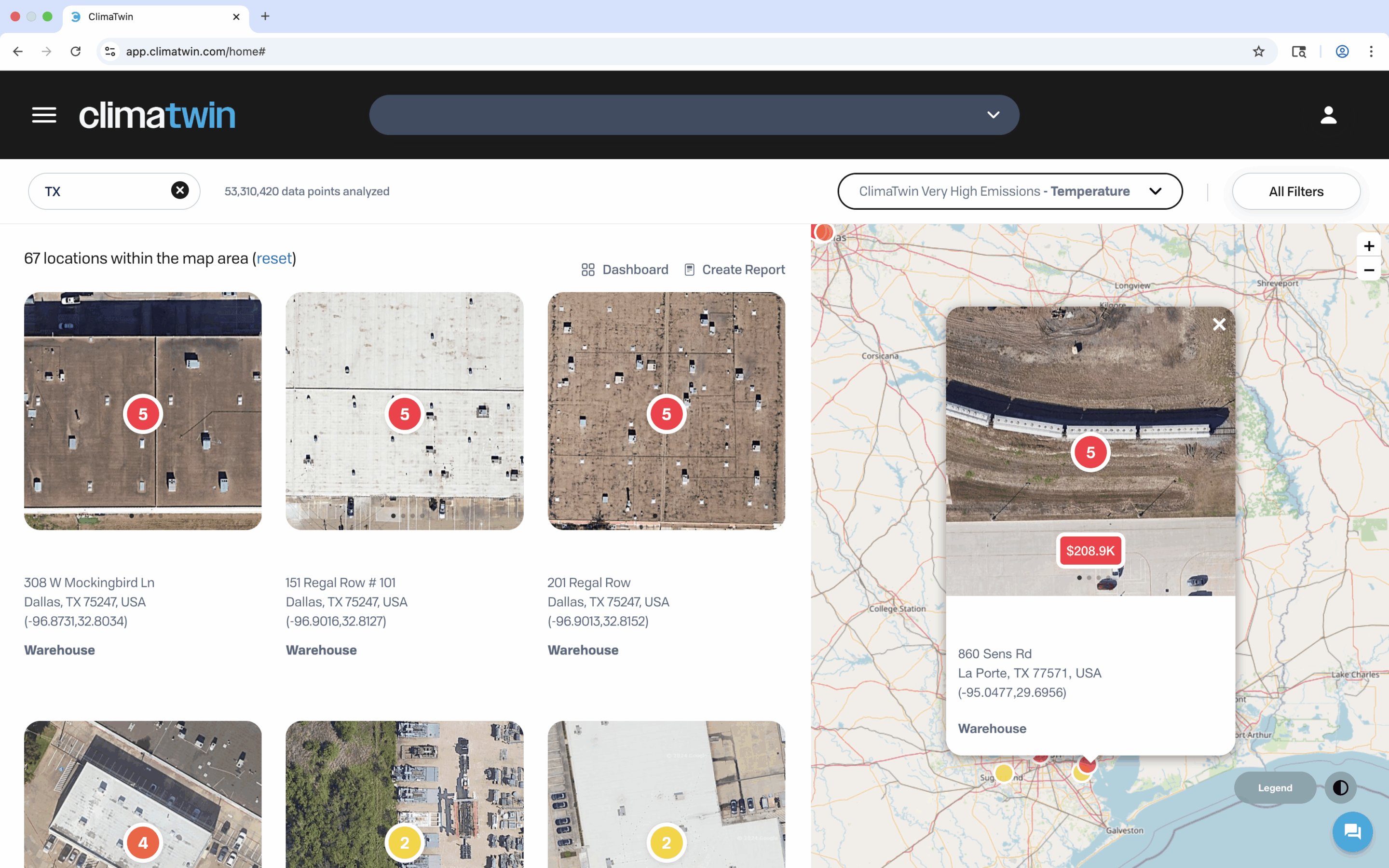
Physical Risk Assessment: CORE
Asset-Level Physical Risk Scoring
- Identify vulnerabilities to floods, heatwaves, wildfires, storms, and other climate hazards.
- Rank hazards, exposures, vulnerabilities, and adaptive capacities to focus on highest risk assets.
- Invest in preventive measures and proactive upgrades that best reduce climate risks and strengthen asset resilience.
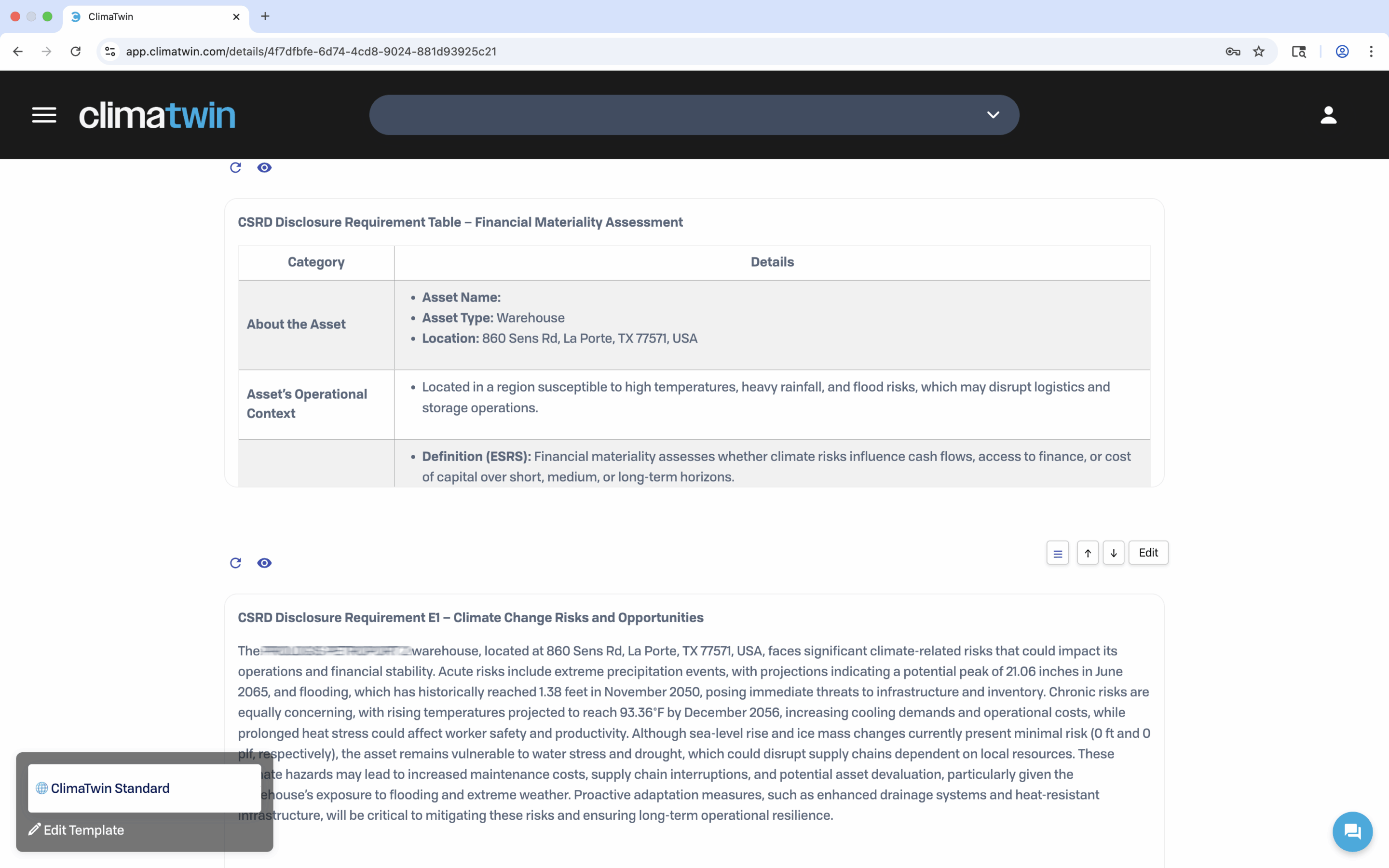
Financial Impact Modeling: CORE
- Estimate financial impacts from asset damages, service disruptions, and operational delays.
- Integrate climate risk data into investment strategies and maintenance budgets for better resource allocation.
- Leverage risk assessments to shape policies, negotiate terms, and optimize premiums.
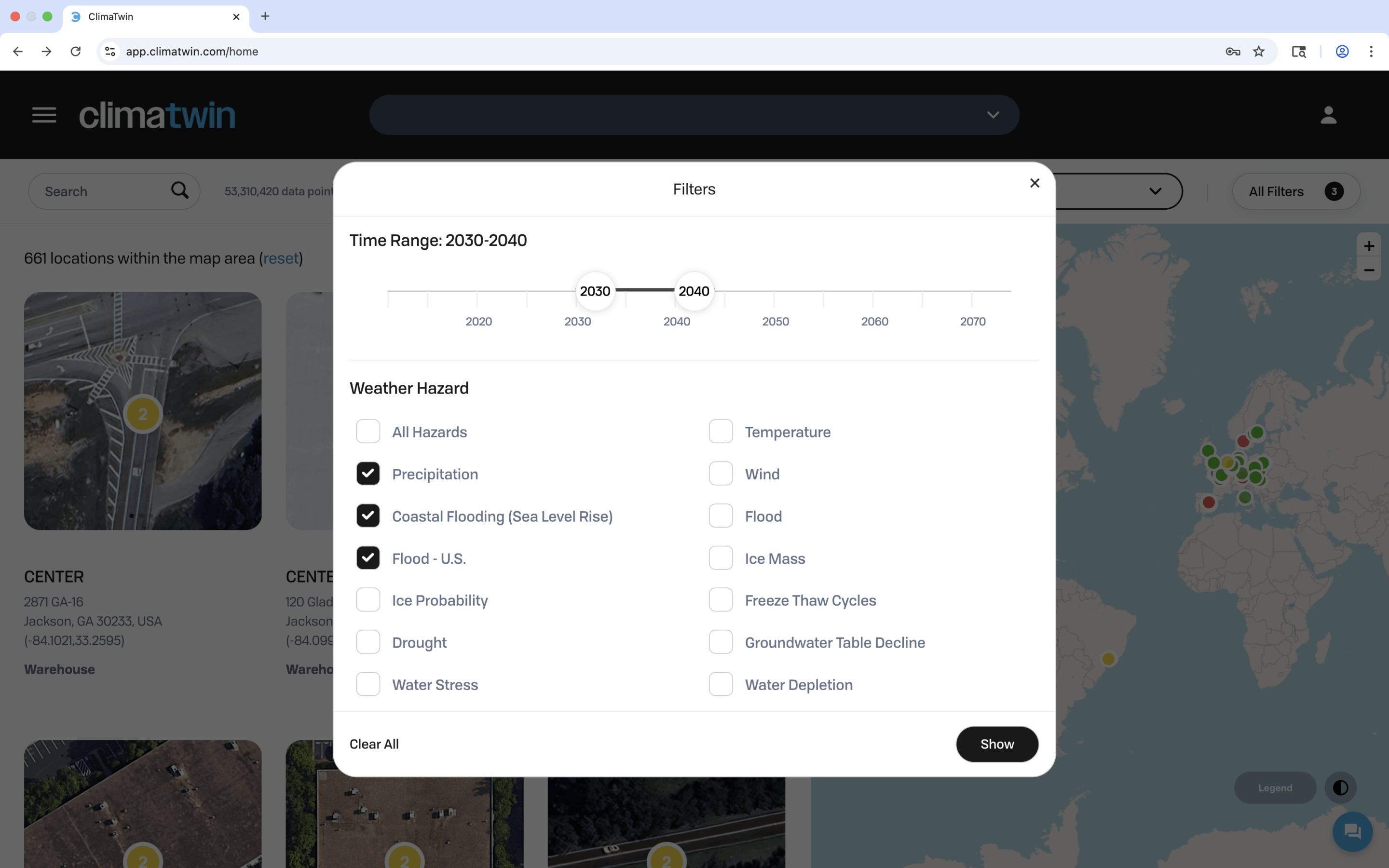
Scenario Analysis: CORE
Climate Futures Stress Testing
- Analyze climate model outputs and socioeconomic scenarios.
- Evaluate how assets and systems perform under moderate to extreme climate futures.
- Develop adaptable strategies that prepare for favorable and severe outcomes.
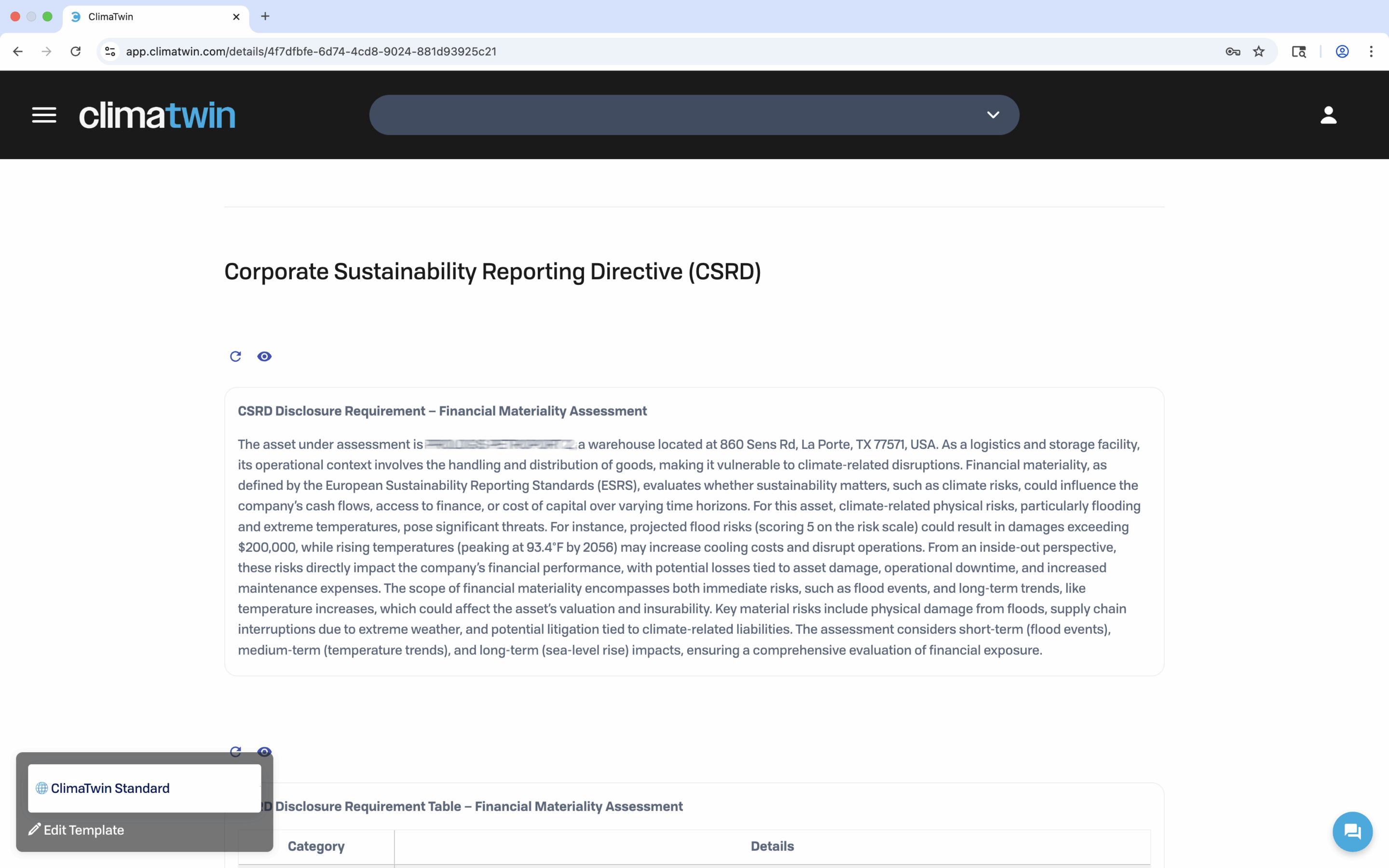
Governance Reporting: CORE
Regulatory-Aligned Reporting Templates
- Produce high-quality reports aligned with leading climate disclosure standards.
- Streamline data collection, analysis, and format.
- Provide clear climate risk information for investors, regulators, and stakeholders.
Strategy Reporting: CORE
Stakeholder-Ready Visualizations
- Transform climate risk insights, data, and analytics into clear visuals.
- Highlight major climate threats with actionable strategies.
- Develop evidence-based graphics that communicate key insights and motivate decisive action.
Frameworks FAQs
How do Australia’s climate standards compare with New Zealand’s climate standards?
Both markets use structured climate disclosure around governance, strategy, risk management, and metrics, though application details differ.
Which entities are most likely to be in scope first in Australia and New Zealand?
Larger listed or regulated entities are generally the earliest and most visible adopters.
What governance disclosures are expected across both markets?
Board oversight, management roles, decision processes, and how climate issues influence planning and risk management.
How should climate risks and opportunities be assessed for these standards?
Evaluate material physical and transition exposures, dependencies, and adaptation or transition responses over relevant time horizons.
What financial impacts should be modeled for Australia and New Zealand reporting?
Effects on asset performance, operating costs, capital expenditure, financing, insurance, and service continuity under climate stress.
How should scenario analysis be documented in each market?
Explain the scenarios used, key assumptions, resilience findings, and how the results inform planning decisions.
What role do transition plans or resilience narratives play in disclosure?
They show how the organization expects to adapt, invest, and manage climate-related change over time.
How can asset-level physical risk assessment improve disclosure quality?
It turns broad climate assumptions into specific evidence on exposure, vulnerability, and priority assets.
How should organizations manage metrics and targets across both markets?
Use common definitions and controls so metrics are consistent, comparable, and decision-useful.
How can cross-border entities coordinate Australia and New Zealand climate reporting?
Create a shared climate data and governance model, then localize outputs for each jurisdiction’s standard and timeline.